Sleep Reset: A 7-Day Guided Bedtime Routine
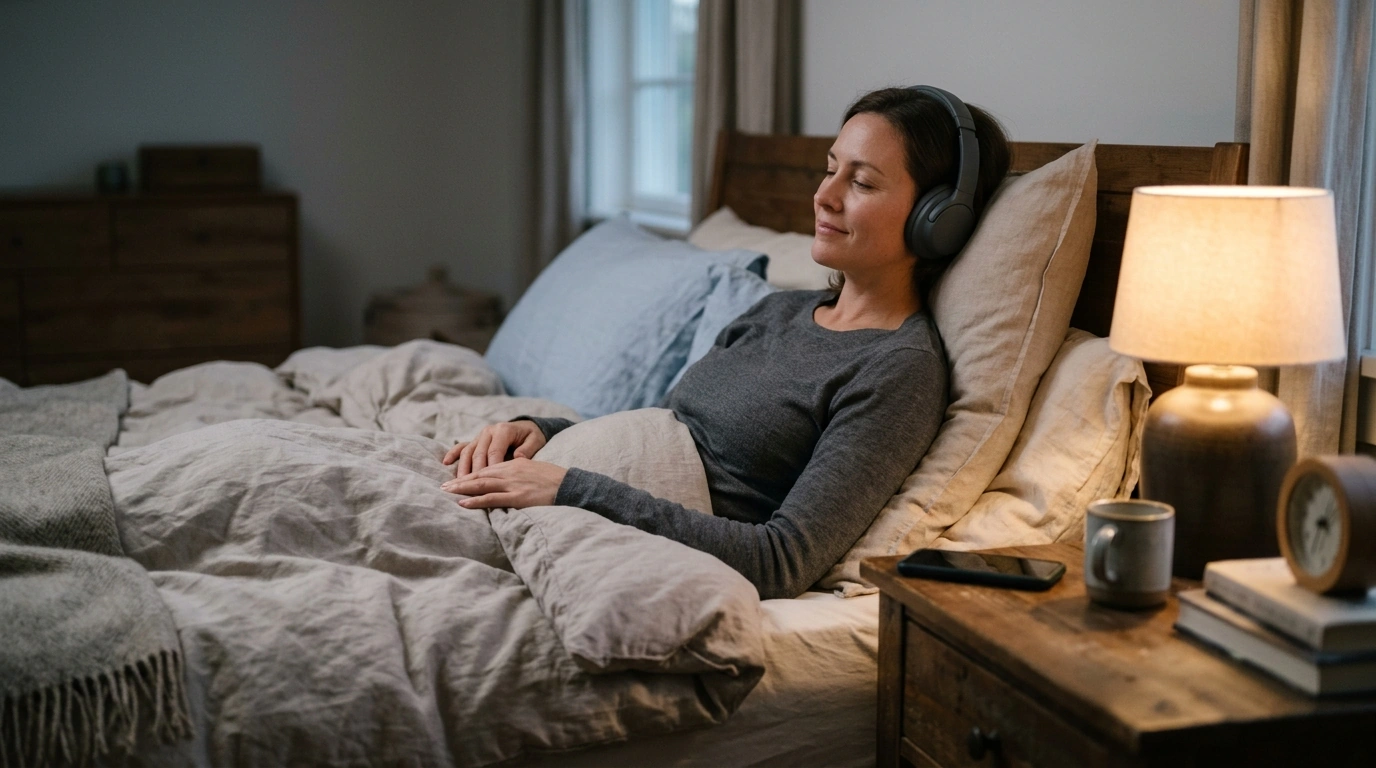
A busy day doesn’t always end when you turn off the lights. If you want a little more structure around bedtime, a guided audio routine can give you a moment to pause and settle in. Our Sleep Reset course offers seven days of sleep meditation and deep relaxation to help you make space for that transition.
There’s no single routine that works for everyone, and guided audio is not a guaranteed cure for insomnia. You can approach the course as a supportive part of your evening, without putting pressure on yourself to achieve a particular result.
Make Room for a Sleep Reset
Bedtime can feel less abrupt when you have a familiar activity between the demands of the day and the time you plan to sleep. Listening to a guided recording is one way to create that pause. Rather than deciding what to do next, you can follow a voice and give yourself permission to step away from your to-do list.
Our Sleep Reset guided audio course is a seven-day course centered on sleep meditation and deep relaxation, available for $25.99. It offers a defined starting point if you’re curious about bringing guided relaxation into your evenings.
Your experience may change from one night to the next. You might enjoy the quiet time, find it easier to shift your attention away from the day, or discover that a different wind-down activity suits you better. Sleep results vary, too, so consider the course an opportunity to explore a routine rather than a promise of a certain night’s sleep.
Build a Bedtime Routine Around the Course
Start by choosing a time when you can regularly wind down. It doesn’t need to be elaborate: a few familiar steps can signal that you’re moving out of daytime mode. Put away tasks that can wait, silence distracting notifications, and give yourself room to listen without rushing to the next activity.
Choose a comfortable position, whether that means sitting in a supportive chair or settling into bed. Where practical, make the room quiet and dim. If you share your space, a considerate volume or headphones may help you listen without disturbing someone else.
Follow the course over its seven days and notice how the routine fits into your evening. You don’t have to force yourself to relax or judge each session by how quickly you fall asleep. The aim is to make the listening time approachable enough that you can return to it.
| Step | Practical idea |
|---|---|
| Prepare | Dim the lights and settle somewhere comfortable. |
| Listen | Use the guided audio as part of the evening routine. |
| Keep it consistent | Return to the routine over the seven-day course. |
Keep the rest of your routine simple. For example, you might wash up, set out what you need for the morning, and then listen. If a particular step makes the evening feel more complicated, adjust it. A routine is useful when it supports you, not when it becomes another task to perfect.
Who Might Enjoy Guided Sleep Audio?
Sleep Reset may appeal to adults who want a structured way to unwind or who are interested in exploring sleep meditation. The seven-day format gives you a set period to try the practice without having to plan a different activity each evening.
Guided audio can also be a good fit if you prefer spoken direction to sitting quietly on your own. Some people appreciate having something gentle to follow when their attention keeps returning to work, household tasks, or tomorrow’s plans. Others prefer silence, reading, or another calming activity. You can choose the approach that feels comfortable and practical for you.
Guided relaxation is not a substitute for care when sleep problems persist. The course is intended to support a bedtime routine, not to diagnose, treat, or cure insomnia.
Support Your Routine Beyond the Audio
The time you spend listening is only one part of your evening. A reasonably regular sleep schedule and a comfortable bedroom can also help create a consistent setting for rest. The CDC’s healthy sleep guidance offers more ideas for building habits around sleep.
You can also pay attention to what keeps you feeling alert late in the day. Consider limiting caffeine later on and setting aside stimulating activities before bed. Small adjustments may be easier to maintain than changing your entire evening at once.
If you continue to have trouble sleeping, talk with a qualified health professional. Persistent sleep difficulties can have different causes, and a clinician can help you consider appropriate next steps. For insomnia, cognitive behavioral therapy for insomnia may be recommended; the National Heart, Lung, and Blood Institute provides information about evaluation and treatment.
Explore Sleep Reset
If a spoken guide sounds like a welcome addition to your evenings, visit our Sleep Reset product page to see the current price and availability. Our team also offers the Whole You holistic wellness guide as a separate resource for broader self-care. It is not included with the audio course.
FAQ
What is Sleep Reset?
Sleep Reset is a seven-day guided audio course focused on sleep meditation and deep relaxation.
Can guided audio cure insomnia?
No cure is guaranteed. Guided relaxation may support a bedtime routine, but persistent insomnia warrants guidance from a health professional.
When should I listen to the course?
Try listening during a consistent evening wind-down, when you can set aside distractions and settle comfortably.












Leave a comment